

Material Certifications for Reusable Bags
RCS 100 & RCS Blended for PP Woven Bags
Certified recycled content. A material choice worth sharing.
A reusable bag is part of how customers see your business. It carries your products, showcases your logo and becomes part of your customers’ everyday routines.
Choosing a bag with certified recycled content gives you something specific and verifiable to share with customers about the material used to make it.
Our manufacturing partner in Vietnam, which produces PP woven bags for REBAGS, holds RCS certification in the RCS 100 and RCS Blended categories.
What is RCS?
The Recycled Claim Standard (RCS) is a voluntary international standard developed by Textile Exchange. It verifies the recycled content of products and tracks that material through the supply chain.
Through audits by independent certification bodies, the standard helps verify that material claimed as recycled is indeed recycled and is present in the specified product.
For businesses ordering reusable bags, this means greater transparency when choosing materials and clearer information to share with customers. textileexchange.org
The Two RCS Categories
RCS 100: High Recycled Content
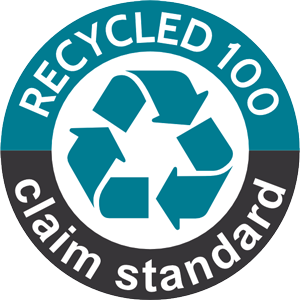
RCS 100 applies to products or eligible components containing at least 95% certified recycled material, in accordance with the standard’s composition requirements.
This category is suitable for businesses that prioritise a high proportion of recycled material and want to communicate that specification with supporting documentation.
“100” is the name of the certification category. The exact percentage of recycled material depends on the product’s composition.
RCS Blended: Recycled Content in Mixed Materials
RCS Blended applies to products that combine certified recycled material with other materials and contain at least 5% certified recycled content.
It is typically used for recycled content below 95%, although it can also apply at higher percentages depending on the composition. When comparing options, check the actual recycled content of each bag. textileexchange.org
Both categories serve the same purpose: to provide independent verification and traceability of recycled content.
Printing the Appropriate RCS Label on Your Bags
On request, we can assess whether the appropriate RCS 100 or RCS Blended label can be included in the artwork for the bags you order from REBAGS.
The label may be printed on eligible certified orders in accordance with the official rules for use and subject to the required approvals. hub.textileexchange.org
Placed alongside your own artwork, the label can help you:
- Inform your customers by making your choice of certified recycled content visible.
- Make your brand communications more specific by linking your message to the actual composition of the bag.
- Highlight your choice of materials alongside the bag’s design and practical features.
- Keep that information visible as customers reuse the bag in their everyday lives.
RCS provides specific information about the bag’s recycled content and the traceability of that material.
Your Bag, with a Message You Can Back Up
REBAGS works exclusively with businesses. We tailor each order to the needs of the company placing it.
If you are interested in PP woven bags with certified recycled content and the corresponding label, let us know at the start of the project. We will review the options available for your order and how the label could be incorporated into your artwork.
Get in touch to discuss how your next reusable bag can tell customers more about the materials you chose.
Contact REBAGSOEKO-TEX® STANDARD 100: What Certification for Harmful Substance Testing Means
Choosing a fabric starts with what you can see and feel. Certification also examines what you cannot detect by sight or touch.
When choosing a cotton bag for your business, you consider its appearance, feel, dimensions and print. Another important consideration is whether the material has been tested for substances that may be harmful to human health.
That is the focus of OEKO-TEX® STANDARD 100, an international testing and certification system for textile products.
All fabrics we use to make REBAGS cotton bags are certified to OEKO-TEX® STANDARD 100.
What Exactly Is OEKO-TEX® STANDARD 100?
OEKO-TEX® STANDARD 100 certifies that a specific textile article has been laboratory-tested for harmful substances and meets the limits and requirements of the standard.
Certification can apply at different stages of production, from yarns and fabrics to finished products. Independent partner institutes carry out the tests using common evaluation criteria. oeko-tex.com
Certification is based on laboratory testing and defined specifications for the material being assessed.
What Do the Tests Cover?
The standard provides for assessment against a list of more than 1,000 harmful substances. Areas of testing include certain banned azo dyes, formaldehyde, heavy metals and pesticide residues.
The assessment covers substances subject to legal restrictions as well as others considered relevant to human health. In several cases, the criteria go beyond the applicable legal requirements. oeko-tex.com
Certification means the certified article meets the requirements for the substances covered by the standard. It does not support a general “chemical-free” claim.
Testing Based on the Intended Use
STANDARD 100 takes into account how a product is used and how much contact it has with the skin. The criteria become stricter as the expected skin contact increases and the intended user is more sensitive.
The limits for harmful substances are reviewed at least once a year to reflect new scientific knowledge and developments. oeko-tex.com
Why Does It Matter for Business Buyers?
Understanding the certification helps businesses set clearer purchasing criteria when sourcing fabric bags.
Appearance and functionality remain important. Documentation about the materials gives buyers more information to use when evaluating suppliers and defining order specifications.
It helps buyers:
- Request specific information about the materials and the tests carried out.
- Check the validity and scope of each certificate.
- Distinguish between certification of a fabric and certification of the entire finished product.
- Base their communications on information they can verify.
Does It Mean the Cotton Is Organic?
STANDARD 100 covers testing for harmful substances. On its own, it does not certify that cotton was grown organically.
Organic origin is a separate characteristic and requires its own certification. STANDARD 100 also does not provide comprehensive certification of the environmental and social conditions under which a product was made. oeko-tex.com
Make an Informed Choice for Your Next Order
A fabric bag represents your business every time it is used. It is worth knowing what it is made from and what the certifications for those materials actually cover.
Contact REBAGS to discuss the specifications for your next order and choose the cotton bag that suits your business.